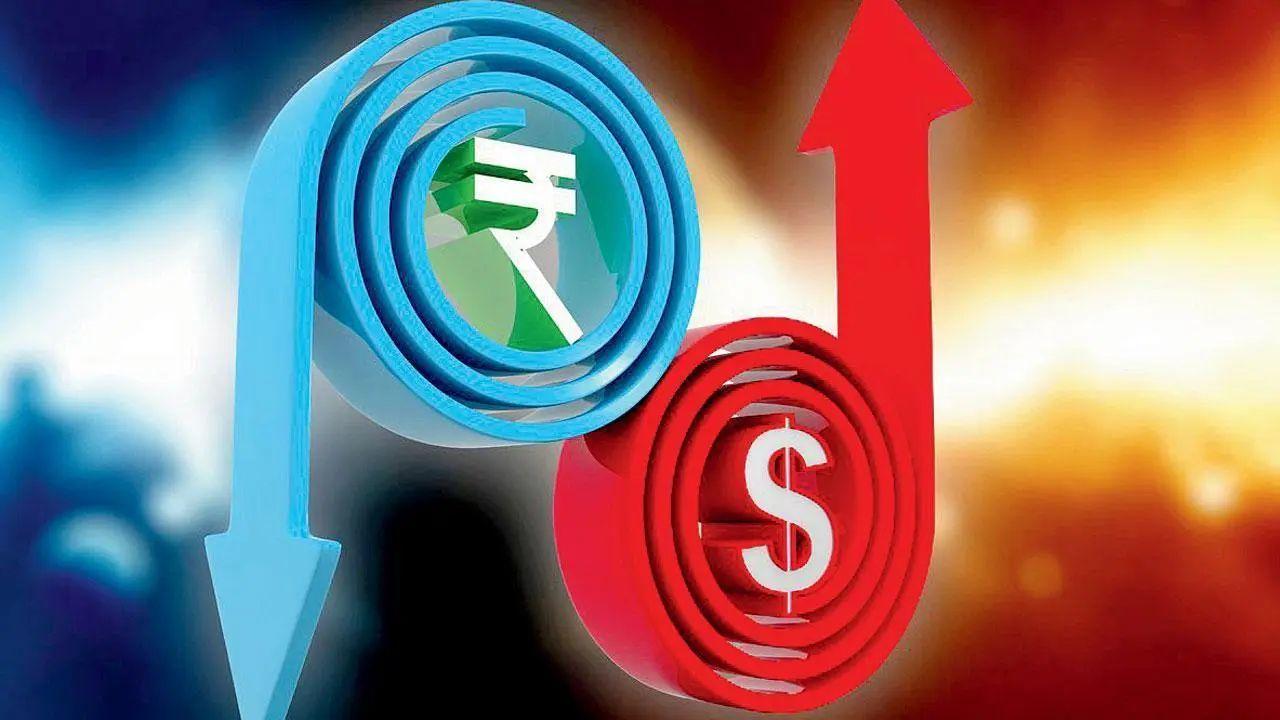
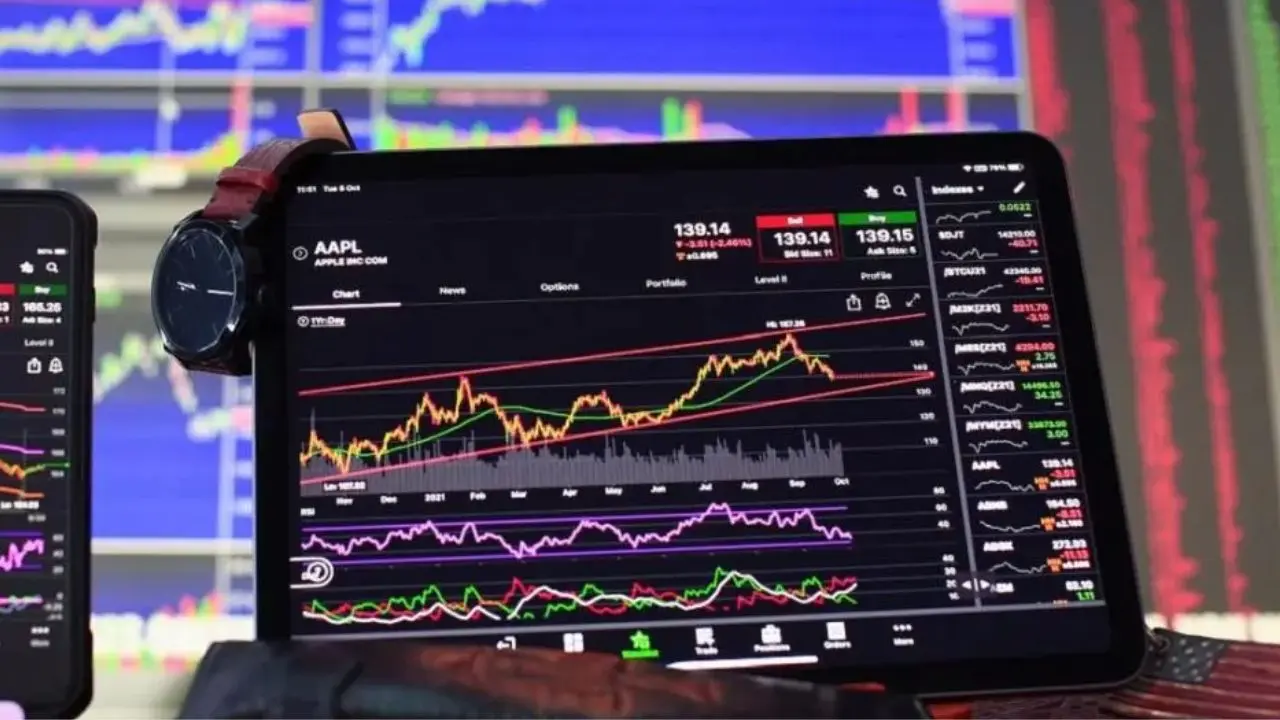
After a highly volatile session in the past few days, Indian equity markets on Friday opened under pressure. The benchmark indices Nifty 50 and BSE Sensex on the last day of the week declined amid rising geopolitical tensions between the US and Iran, higher crude oil prices, and cautious investor sentiment. The Nifty 50 index opened at 25,406.55, down -47.80 points or (-0.19 per cent), while the BSE Sensex also opened lower at 82,272.49, down -225.65 points or -0.27 per cent. Market experts attribute weakness to global uncertainty and rising geopolitical risks Ajay Bagga, banking and market expert, told news agency ANI, "Risk-off sentiment dominates due to geopolitical tensions (Iran). Fragile investor confidence after US market weakness. Macro backdrop: the US cycle is cooling but resilient. The Eurozone is stabilising. China is still facing property stress but showing managed stabilisation, as Lunar New Year holiday spending will give a clue next week on the strength of the Chinese consumer." "Iran's escalation risk is high; Supreme Leader Khamenei rejected US demands to halt uranium enrichment. Trump has warned Tehran of 'traumatic consequences' if no deal is reached within a month. US military buildup in the region raises the risk of weekend escalation. Arab allies are not keen on risking Iranian retaliation," Bagga added. Crude oil prices experience hike Furthermore, rising crude oil prices also weighed on investor sentiment. Brent crude prices crossed the USD 70 mark and are currently trading at USD 71.82 per barrel amid tensions between the US and Iran. Also, the precious metals remained firm, reflecting cautious sentiment. Gold prices held strong at Rs 155277 per 10 grams for 24 karat, while silver prices rose by 1.14 per cent to Rs 244113 per kg. Broad market indices also witnessed declines on NSE. Nifty 100 was down by 0.18 per cent, Nifty Smallcap 100 declined by 0.15 per cent, and Nifty Midcap index fell by 0.24 per cent. Experts on crude oil prices VK Vijayakumar, chief investment strategist, Geojit Investments, told ANI, "The sharp spike in Brent crude to USD 72 reflects growing fear and uncertainty in markets. The continuing weakness in IT stocks is another dampener for the market." “Amidst the many crises, the strength of the Indian economy and the recovery in corporate earnings, as reflected in Q3 numbers, are positives for the market. If, hopefully, the US-Iran standoff gets resolved in the coming days, the market will bounce back. Therefore, investors may wait and watch the unfolding developments in West Asia,” he added. Other Asian markets also reflected mixed trends. Japan's Nikkei 225 index declined by 1 per cent to the 56845 level, while Hong Kong's Hang Seng index fell by 0.63 per cent to 26536. Taiwan's markets remained closed. Singapore's Straits Times Index rose marginally by 0.15 per cent to 5007, while South Korea's market witnessed a strong rally with a jump of more than 1 per cent to 5762. Global markets The US markets also closed lower on Thursday, adding to global caution. S&P 500 declined by 0.28 per cent to 6861, while Nasdaq fell by 0.36 per cent to 22672.72. Rising geopolitical tensions, elevated crude oil prices, and global market weakness continue to weigh on investor sentiment, keeping the outlook cautious in the near term. (With inputs from ANI)
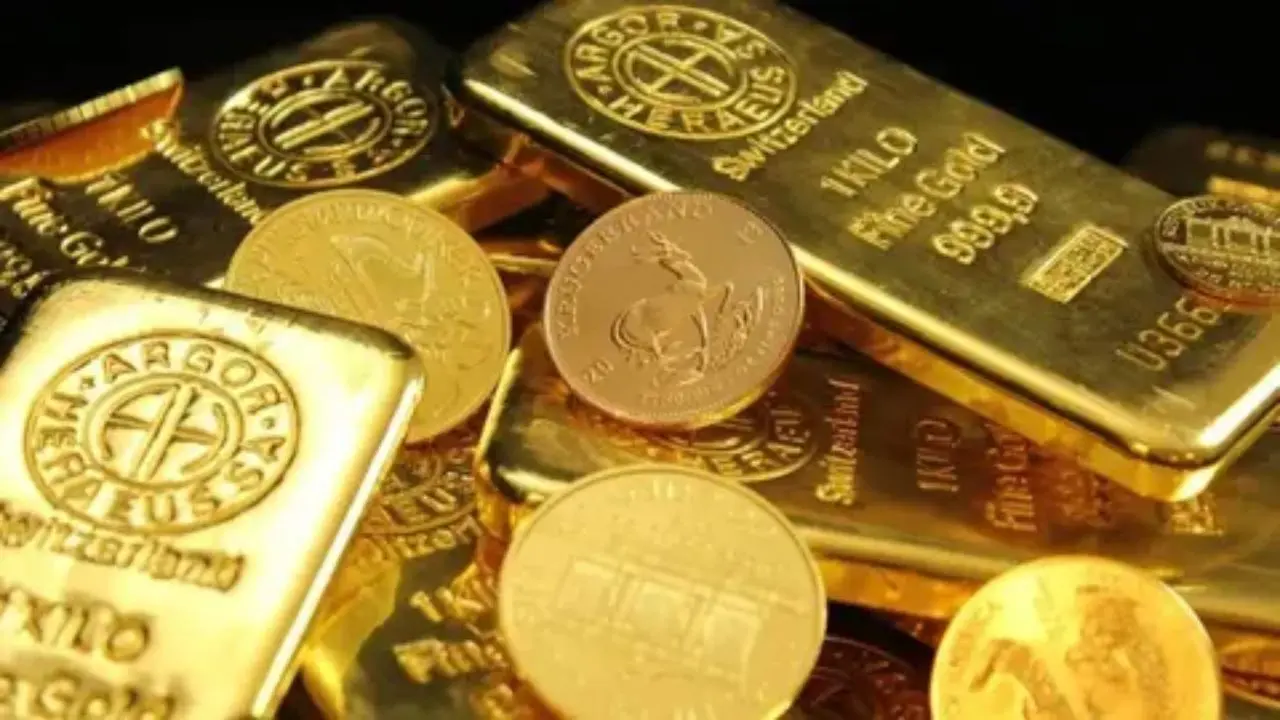
20 February,2026 12:39 PM IST | Mumbai | mid-day online correspondentGold and silver prices continued to rise for a second consecutive day on Thursday amid a rise in geopolitical tensions. The sudden rise in gold prices in the commodity market is because of the cautiousness of the US Federal Reserve stance and withdrawal of additional margins on gold and silver futures in the domestic market. As reported by news agency IANS, the US Defence Department has sent additional weaponry to the Middle East, such as warships, air defences and submarines, in preparation for a possible military strike on Iran if negotiations fail, according to multiple reports. Gold prices in Mumbai While the price of the yellow metal across Mumbai and India has been extremely volatile for the last few days, the 24-carat gold on Thursday experienced a marginal hike in prices. At the time of filing this story, the price of 24-carat gold in Mumbai stood at Rs 1,54,470 for 10 grams. On the other hand, the price of 22-carat gold was recorded at Rs 1,41,420 for 10 grams. However, the demand for gold in India amid the volatility remains stagnant. Gold MCX The MCX gold April futures on Thursday also gained 0.22 per cent to Rs 156,100 per 10 grams on an intraday basis. Meanwhile, MCX silver March futures gained 0.29 per cent to Rs 244,971 per kg, as per IANS. The MCX and the NSE have withdrawn the additional margin of 3 per cent levied in gold futures and 7 per cent levied in silver futures in all contracts of all variants, with effect from Thursday. The removal of additional margins is expected to invite higher speculative participation in the market and increase intraday activity, pushing prices higher. Further, thin liquidity because of Lunar New Year holidays in Mainland China and several other Asian markets also acted as headwinds on the rally, market participants said. Gold prices in the international market In international markets, gold prices hovered around USD 5,000, while dip buying ahead of the Federal Reserve meeting minutes was seen, while mixed economic data kept the US Fed officials' opinion on monetary policy divided, said Manav Modi, commodities analyst, Motilal Oswal Financial Services Ltd. (With inputs from IANS)
19 February,2026 12:26 PM IST | Mumbai | mid-day online correspondentEquity benchmark indices Sensex and Nifty on Thursday began the trade on a positive note. However, it did not sustain the momentum for long. Soon the indices turned red, amid selling pressure in services and consumer durables stocks. As reported by news agency PTI, the 30-share BSE Sensex climbed 245.11 points, or 0.29 per cent, to 83,979.36 in early deals. Whereas, the NSE Nifty went up by 65.95 points, or 0.25 per cent, to 25,885.30. However, both the benchmark indices, after gaining early momentum, soon started to deteriorate, with the Sensex quoting 131.07 points lower at 83,603.18 and the Nifty down 30.70 points at 25,788.65. Among the Sensex constituents, IndiGo, Asian Paints, Adani Ports, Bharat Electronics Ltd, ITC, Trent, Larsen & Toubro, Kotak Mahindra Bank, Axis Bank, PowerGrid, Reliance Industries, and Bajaj Finance were the top losers. IT and auto stocks gains in early trade On the other hand, Infosys, HCL Technologies, Tata Consultancy Services, Tech Mahindra, Maruti Suzuki India, Hindustan Unilever, State Bank of India, Bharti Airtel and NTPC were trading in the green territory during the early hours of Thursday. Asian market jumps 3 per cent On the contrary, in Asian markets, South Korea's Kospi jumped 3 per cent, and Japan's Nikkei 225 index gained nearly 1 per cent. Whereas, the markets in Hong Kong and mainland China remained closed for Lunar New Year holidays. However, the US equities market closed higher in overnight deals on Wednesday. FIIs and DIIs As reported by PTI, foreign institutional investors bought equities worth Rs 1,154.34 crore on Wednesday, while domestic institutional investors were also the net buyers of stocks worth Rs 440.34 crore, according to exchange data. Whereas in the commodity market, Brent Crude, the global oil benchmark, rose 0.37 per cent to USD 70.61 per barrel. On Wednesday, the 30-share BSE Sensex jumped 283.29 points to settle at 83,734.25, while the broader NSE Nifty gained 93.95 points to close at 25,819.35. Gold and Silver prices on rise Gold and silver prices continued to rise for a second consecutive session on Thursday amid rise in geopolitical tensions, cautiousness of the US Federal Reserve stand and withdrawal of additional margins on gold and silver futures in domestic market. (With inputs from PTI)
19 February,2026 11:52 AM IST | Mumbai | mid-day online correspondentGold and silver prices rose on Wednesday after two consecutive sessions of decline, amid renewed buying interest due to global macro-economic factors. Easing US-Iran tensions due to progress in negotiations and a firmer US dollar capped gains by weighing on safe-haven demand. Thin liquidity because of Lunar New Year holidays in several Asian markets also acted as headwinds on the rally, market participants said. MCX gold April futures gained 1.24 per cent to Rs 1,53,294 per 10 grams on an intra-day basis. Meanwhile, MCX silver March futures gained 3.81 per cent to Rs 2,37,490 per kg. In international markets, gold prices slipped below $4,900, while declining Treasury yields offered limited support and kept sentiment cautious across Commodities. Iran and the US reached an understanding on key guiding principles to frame future nuclear negotiations, during talks in Geneva, raising hopes of diplomatic progress. Iranian Foreign Minister Abbas Araghchi described the discussions as more constructive than before, with both sides planning to draft and exchange texts for a potential agreement, though he cautioned that this did not mean a final deal is imminent. Araghchi, however, added that the United States should immediately stop the threat of using force against Iran, according to multiple reports. Despite the price decline, gold ETF holdings continued to edge higher, indicating underlying institutional interest, while physical demand remained resilient in India and China, with India’s January imports rising, said Manav Modi, Commodities Analyst, Motilal Oswal Financial services Ltd. Analysts said the volatility in silver stems from a demand‑supply mismatch and profit‑booking after steep gains over the past year, even as gold remains elevated compared with recent weeks. The dollar index surged 0.10 per cent to 97.25, making greenback-priced bullion more expensive for other currency holders. "Gold has support at Rs 1,49,800 and Rs 1,47,700 while resistance at Rs 1,53,150 and Rs 1,55,500. MCX silver has support at Rs 2,24,400 and Rs 2,18,800, and resistance is at Rs 2,32,200 and Rs 2,36,000," an analyst said. This story has been sourced from a third party syndicated feed, agencies. Mid-day accepts no responsibility or liability for its dependability, trustworthiness, reliability and data of the text. Mid-day management/mid-day.com reserves the sole right to alter, delete or remove (without notice) the content in its absolute discretion for any reason whatsoever.
18 February,2026 02:28 PM IST | Mumbai | IANSAmid the concerning market volatility, equity benchmark indices Sensex and Nifty began the trade in negative territory on Wednesday, tracking losses in IT and services stocks in a volatile session. As reported by news agency PTI, after a bearish start, the 30-share BSE Sensex further declined 247.92 points, or 0.30 per cent, to 83,203.04. Nifty 50 dropped by 70.25 points While the market did not fall down significantly on Wednesday, the 50-share NSE Nifty dropped 70.25 points, or 0.27 per cent, to 25,655.15. On the other hand, the Sensex constituents Infosys, Tech Mahindra, Adani Ports, HCL Technologies, Tata Consultancy Services, Eternal, Maruti Suzuki India, Asian Paints, Trent, HDFC Bank, IndiGo, Kotak Mahindra Bank and ICICI Bank were the major laggards. Top gainers ITC, Tata Steel, Bajaj Finserv, Bharat Electronics Ltd, State Bank of India, UltraTech Cement, Sun Pharmaceutical and Bajaj Finance were the gainers. VK Vijayakumar, Chief Investment Strategist, Geojit Investments Ltd, said, "The volatility in IT stocks may continue, in response to incoming news relating to the sector. Overall, IT stocks may remain weak since uncertainty surrounding the sector is huge, and large institutional investors are unlikely to invest big time in IT stocks unless valuations become compelling," as cited by PTI. He added that there can be churns away from IT towards other sectors like banking and financials, automobiles, telecom, pharmaceuticals, etc., where there is good earnings visibility. Asian markets open in green On the contrary, in Asian markets, Japan's Nikkei 225 benchmark was trading over 1 per cent higher. Markets in China, Hong Kong, and South Korea remained closed for trading on account of Lunar New Year holidays. The US equities market ended higher in overnight deals on Tuesday. As reported by news agency PTI, foreign institutional investors bought equities worth Rs 995.21 crore on Tuesday, while domestic institutional investors purchased stocks worth Rs 187.04 crore, according to the exchange data. Also, brent crude, the global oil benchmark, rose 0.22 per cent to USD 67.59 per barrel. On Tuesday, the 30-share BSE Sensex climbed 173.81 points to close at 83,450.96. The 50-share NSE Nifty advanced 42.65 points to settle at 25,725.40.
18 February,2026 11:30 AM IST | Mumbai | mid-day online correspondentIn order to support liquidity in the banking system, the Reserve Bank of India (RBI) has purchased government securities equivalent to 47 per cent of the Centre's total bond issuances so far in FY26, according to public data. Data compiled by PTI from RBI showed that the Centre raised Rs 13,65,000 crore from April 4, 2025, to February 13 this year by issuing government securities as part of its gross borrowing programme. In parallel, the RBI conducted Open Market Operations (OMO) purchase auctions totalling Rs 6,39,203 crore, injecting durable liquidity into the banking system. The large-scale purchases came amid sustained government borrowing, which typically absorbs liquidity from the banking system and exerts upward pressure on bond yields. By buying bonds from the secondary market, the central bank infused liquidity and helped maintain orderly market conditions, experts said.The move helped cushion the banking system from liquidity tightness and prevented excessive hardening of yields despite heavy supply of government securities. It also ensured adequate funds in the system to support credit growth. "RBI's OMO purchases have been actively deployed to ensure adequate core liquidity, amid RBI's USD sales at a time of capital outflows and INR depreciation pressures. "Various tools deployed by RBI including OMO purchases have thus provided durable liquidity and, in the process, mitigated upward pressure from global market forces," said Brijesh Shah, senior vice president, fixed income at Bandhan AMC. Potential positive sentiment for capital flows around the recent India-US trade deal (thus reduced FX intervention), and deployment of other tools like FX swaps could also imply lesser need for OMOs ahead, he added. The liquidity had been in the surplus mode for much of FY26, but for a few episodes of it swinging into deficit. The OMO purchase operations by the RBI intensified since December 2025, when liquidity started getting squeezed and fell in deficit mode. The intervention by the RBI by giving liquidity to the banking system also helped money market rates to be contained and overnight rates to trade close to repo rate.Since January 2025, the bond yields remained volatile due to various reasons such as geopolitical situations leading to rising crude oil prices, anticipation of end of rate cut cycle, and finally due to higher than expected gross borrowing numbers announced by the government for FY27 in the Union Budget. The 10-year benchmark bond yield moved in the range of 6.30-6.70 per cent between January 2025, and February 2026. The government has planned to borrow Rs 17.2 lakh crore for FY27 significantly higher than the market projection of Rs 16.5-17 lakh crore, leading to sharp rise in yields on government securities. However, on the other hand, the net borrowing by the government was Rs 11.73 lakh crore, from 11.53 lakh crore, a jump of Rs 20,000 crore. According to the RBI data, government securities worth Rs 5.47 lakh crore are lined up for maturities. Government borrowings are a key determinant of interest rates in the economy, and a higher supply of bonds puts pressure on yields unless matched by strong demand from banks, insurers, and foreign investors. This story has been sourced from a third party syndicated feed, agencies. Mid-day accepts no responsibility or liability for its dependability, trustworthiness, reliability and data of the text. Mid-day management/mid-day.com reserves the sole right to alter, delete or remove (without notice) the content in its absolute discretion for any reason whatsoever.
17 February,2026 07:29 PM IST | Mumbai | PTIGold and silver prices declined for a second consecutive session on Tuesday, as investors analysed mixed US economic data and waited for cues on the US Federal Reserve’s policy path. MCX gold April futures dipped 0.56 per cent to Rs 1,53,889 per 10 grams on an intra-day basis. Meanwhile, MCX silver March futures declined 1.18 per cent to Rs 2,37,064 per kg. Gold prices in Mumbai While the gold prices on the MCX have been declining, the price of yellow metal in the market has also been experiencing a downward trajectory since the last few days. Gold prices in Mumbai on Tuesday fell down by Rs 1,310 and were recorded at Rs 1,56,570 for 10 grams of 24-carat gold. On the other hand, the price of 22-carat gold in Mumbai stood at Rs 1,43,530 for 10 grams. While the price since the start of this month has been extremely volatile, the investors are quite confused about investing in the precious metal. Investors remain undecided on whether softer inflation readings will eventually translate into easier monetary policy or whether stronger labour market data will keep rates higher for longer, analysts said. Dollar prices surges by 0.21 per cent The dollar index surged 0.21 per cent to 97.12, tracking the moderation in US CPI (consumer price index) in January. A stronger dollar made greenback-priced bullion more expensive for other currency holders, reported IANS. In international markets, spot gold dipped below the USD 5,000 mark to USD 4,992 an ounce and spot silver slid nearly 3 per cent. The ease in prices came as US consumer prices in January rose less than expected even as job growth surprised on the upside, complicating the outlook for near‑term rate cuts. COMEX Gold is trading within the USD 4,850–USD 5,100 range after a sharp correction from recent highs above USD 5,500–USD 5,600, analysts said. Ease in geopolitical tensions also reduced safe haven demand for gold as an Iranian diplomat said that Iran is seeking a nuclear agreement with the United States that would yield economic benefits for both sides. Gold shows resistance at Rs 1,50,000 "Gold has support at Rs 1,45,000 and Rs 1,50,000 while resistance at Rs 1,60,800 and Rs 1,65,000. MCX silver has support at Rs 2,25,000 and Rs 2,60,000, and resistance is at Rs 3,00,000 and Rs 3,25,000," an analyst said. The broader trend in precious metal remains constructive due to ongoing geopolitical tensions, strong central bank buying, and investor flight from sovereign bonds and currencies. Investors remain keen on cues over global liquidity conditions, US dollar movement, bond yields, progress on the US-Iran talks and ongoing negotiations to end the Russia-Ukraine war. (With inputs from IANS)
17 February,2026 02:25 PM IST | New Delhi | mid-day online correspondentContinuing the bear run since the last few days, the benchmark equity indices Sensex and Nifty dropped in early trade on Tuesday. However, the buying in blue-chip stocks Infosys and ITC helped the markets recover the lost ground. As reported by news agency PTI, the 30-share BSE Sensex dropped 289.72 points to 82,987.43 in early trade, whereas the 50-share NSE Nifty declined 112.45 points to 25,570.30. However, within a few minutes, both benchmark indices bounced back and were trading in the green. The BSE benchmark quoted 116.08 points higher at 83,393.23, and the Nifty traded 12.90 points up at 25,695.65. Top losers and gainers Among the Sensex constituents, Infosys, ITC, HCL Technologies, Asian Paints, Tech Mahindra, Bharat Electronics Ltd, Tata Consultancy Services, IndiGo, Sun Pharmaceuticals, and Larsen & Toubro were the major gainers. On the other hand, Eternal, Tata Steel, ICICI Bank, Bajaj Finserv, Kotak Mahindra Bank, Reliance Industries, UltraTech Cement, Bajaj Finance, Axis Bank, and Mahindra & Mahindra were among the top losers on Tuesday. Global markets also opened in red Along with the Indian stock market, Japan's Nikkei 225 index traded nearly 1 per cent lower. Also, the markets in China, Hong Kong and South Korea remained closed for the Lunar New Year holidays. While the US equities market remained shut on Monday on account of Presidents' Day. FIIs and DIIs Foreign institutional investors sold equities worth Rs 972.13 crore on Monday, while domestic institutional investors purchased stocks worth Rs 1,666.98 crore, according to the exchange data. Brent crude, the global oil benchmark, fell 0.41 per cent to USD 68.37 per barrel. On Monday, the 30-share BSE Sensex jumped 650.39 points to close at 83,277.15, while the NSE Nifty advanced 211.65 points to settle at 25,682.75, as per PTI. Gold and Silver Gold and silver prices on Tuesday also declined for a second consecutive session, as investors analysed mixed US economic data and waited for cues on the US Federal Reserve’s policy path. MCX gold April futures dipped 0.56 per cent to Rs 1,53,889 per 10 grams on an intraday basis. Meanwhile, MCX silver March futures declined 1.18 per cent to Rs 2,37,064 per kg, reported IANS. (With inputs from PTI and IANS)
17 February,2026 12:07 PM IST | Mumbai | mid-day online correspondentAfter an extremely volatile last few days, the domestic stock markets on Monday started the fresh week on a weak note. Both the benchmark indices opened in the red amid continued concerns about artificial intelligence (AI) disruptions in the IT sector. As reported by news agency ANI, the Nifty 50 index opened at 25,423.60, down by 47.50 points or 0.19 per cent. Whereas, the BSE Sensex also declined by 146.36 points, opening at 82,480.40. The decline in market indices on Monday reflects cautious sentiment among investors at the start of the trading week. Expressing their views on the downward trajectory of the Indian stock market, the experts highlighted concerns about AI-driven disruptions that continue to affect IT companies, which are an important part of the Indian stock market. Ponmudi R, CEO of Enrich Money, said, "Persistent concerns around AI-driven disruption continue to act as a key overhang for IT heavyweights, reversing part of the optimism earlier sparked by the US-India interim trade framework and reinforcing a broader risk-off undertone. Stabilisation within the IT sector will be crucial for rebuilding broader market confidence," as cited by news agency IANS. He further added, "FII participation has turned mixed and cautious in recent sessions, while steady DII inflows are offering a degree of domestic support. In the near term, sentiment remains fragile, with markets likely to trade in a consolidation phase until clearer direction emerges from global macro signals." Other indices also opened in red Along with Nifty and Sensex, the broader market indices on the NSE also saw declines. The Nifty 100 was down by 0.22 per cent, while the Nifty Midcap 100 fell by 0.46 per cent. The Nifty Smallcap 100 also declined by 0.62 per cent, indicating weakness across companies of different sizes. Among sectoral indices, most sectors were also under pressure on Monday. The Nifty Metal index declined by 0.81 per cent, while the Nifty PSU Bank index fell by 0.46 per cent. The Nifty FMCG index also slipped by 0.18 per cent. However, the Nifty IT index showed marginal strength and was up by 0.04 per cent. Gold and silver prices decline Along with the market indices, gold and silver prices also declined on Monday. Gold prices fell by 0.68 per cent to Rs 154,830 per 10 grams for 24-karat gold. Silver prices saw a sharper fall, declining by 2.92 per cent to Rs 237,222 per kilogram. In other Asian markets, movements remained mostly flat. Japan's Nikkei 225 index was down marginally by 0.09 per cent at 56,890, while Hong Kong's Hang Seng index gained marginally by 0.29 per cent. Markets in Taiwan and South Korea remained closed due to holidays. (With inputs from ANI)
16 February,2026 11:48 AM IST | Mumbai | mid-day online correspondentThe rupee traded in a narrow range and gained 7 paise to 90.40 against the US dollar in early trade on Thursday, amid corporate dollar demand and as investors are awaiting for confirmation on the India-US trade deal. Forex traders said market participants are now shifting focus from celebration to verification as no official documents have been released, and neither side has formally published the final terms. Moreover, investors are awaiting cues from Friday's RBI interest rate announcement. At the interbank foreign exchange market, the rupee opened at 90.52 against the US dollar, then gained some ground to 90.40, registering a gain of 7 paise over its previous close. On Wednesday, the rupee depreciated 15 paise to 90.47 against the US dollar. In the initial trade, it also touched 90.53 against the American currency. "Market is now waiting for confirmation and finer details before extending the rupee's rally further," CR Forex Advisors MD Amit Pabari said.Pabari further said that attention has now turned to the RBI's Monetary Policy Committee meeting. "Markets widely expect the central bank to keep interest rates unchanged tomorrow, with a growing consensus that rate cuts are unlikely at least until the end of 2026," he said. Meanwhile, the dollar index, which gauges the greenback's strength against a basket of six currencies, was trading 0.18 per cent higher at 97.79.Brent crude, the global oil benchmark, was trading 2 per cent lower at USD 68.07 per barrel in futures trade. "Technically, the 89.80 90.00 zone has emerged as a strong support base. With this area holding firmly, the pair now appears poised to move back toward the 90.80, 91.20 range with greater conviction," Pabari said, adding that "going forward, RBI actions will also remain a key factor to watch along with confirmation of the final trade agreement and its exact terms." On the domestic equity market front, Sensex declined 278.72 points to 83,538.97 in early trade, while the Nifty was down 94.15 points to 25,681.85. Foreign Institutional Investors purchased equities worth Rs 29.79 crore on Wednesday, according to exchange data. This story has been sourced from a third party syndicated feed, agencies. Mid-day accepts no responsibility or liability for its dependability, trustworthiness, reliability and data of the text. Mid-day management/mid-day.com reserves the sole right to alter, delete or remove (without notice) the content in its absolute discretion for any reason whatsoever.
13 February,2026 04:19 PM IST | Mumbai | PTIWhile the market indices continued to fall down, the gold and silver prices in commodity markets surged marginally. As reported by news agency IANS, investors took to value buying after prices moderated due to huge declines in the previous session. Gold prices in Mumbai fall by Rs 1,220 While the gold prices in MCX gained significantly, the price of yellow metal in Mumbai experienced a marginal fall. The 24-carat gold in Mumbai lowered by Rs 1,220 since yesterday and stood at Rs 158,670 for 10 grams on Friday. Whereas the 22-carat gold in Mumbai stood at Rs 1,45,470 for 10 grams. MCX gold futures surge MCX gold April futures gained 1.08 per cent to Rs 1,54,480 per 10 grams on an intraday basis. Meanwhile, MCX silver March futures added 2.59 per cent to Rs 242,564 per kg. Sandip Raichura, CEO of Retail Broking and Distribution and Director, PL Capital, while briefing about the situation, said, "Gold has recovered post the January-end collapse and is well on its way to what we believe should be USD 6,000 per ounce levels by CY26 end," as cited by IANS. Sandip further added, “Though US President Donald Trump approved a trade deal with India and hinted at a potential one with Brazil, reducing the trade-related uncertainties, higher inflation and the emerging split between the Northwest and the rest of the world sustain reserve bank buying of gold.” One of the traders, while talking to the media, said, "Gold has support at Rs 1,54,000 per 10 grams, while silver on MCX has support at Rs 242,000 per kg," as per IANS. Nifty and Sensex open in red The domestic benchmark indices on Friday continued the downward trajectory and opened under pressure. Both the Nifty 50 and the BSE Sensex witnessed sharp declines amid weak global cues and risk-off sentiment. As reported by news agency ANI, the Nifty 50 index was down at 25,571.15, declining by 236.05 points or (-0.91 per cent), whereas the BSE Sensex also opened lower at 82,902.73, falling by 772.19 points or -0.92 per cent. Apart from Nifty 50 and Sensex, Nifty 100 also declined by 0.54 per cent, while Nifty Midcap 100 fell by 0.47 per cent, as per ANI. Among sectoral indices on NSE, Nifty IT crashed sharply by 5.51 per cent, emerging as the worst-performing sector. The sharp fall in IT stocks comes amid global tech sector weakness, AI valuation repricing and concerns over AI-led disruption in SaaS stocks. Nifty Auto slipped by 0.12 per cent, Nifty Media declined by 1.31 per cent, Nifty Realty fell by 1.45 per cent and the Nifty Oil and Gas index was down by 1.19 per cent. (With inputs from IANS and ANI)
13 February,2026 12:08 PM IST | Mumbai | mid-day online correspondentADVERTISEMENT








-1771394441932_d.png "Representational image")
-1771333604536_d.png "RBI buys 47 pc of FY26 government bonds to support liquidity. Representational Image")

-1771222700110_d.png "Representational image")